
StockTwin: a stockpile built the way one actually is, truck by truck
Published:
StockTwin: a stockpile built the way one actually is, truck by truck
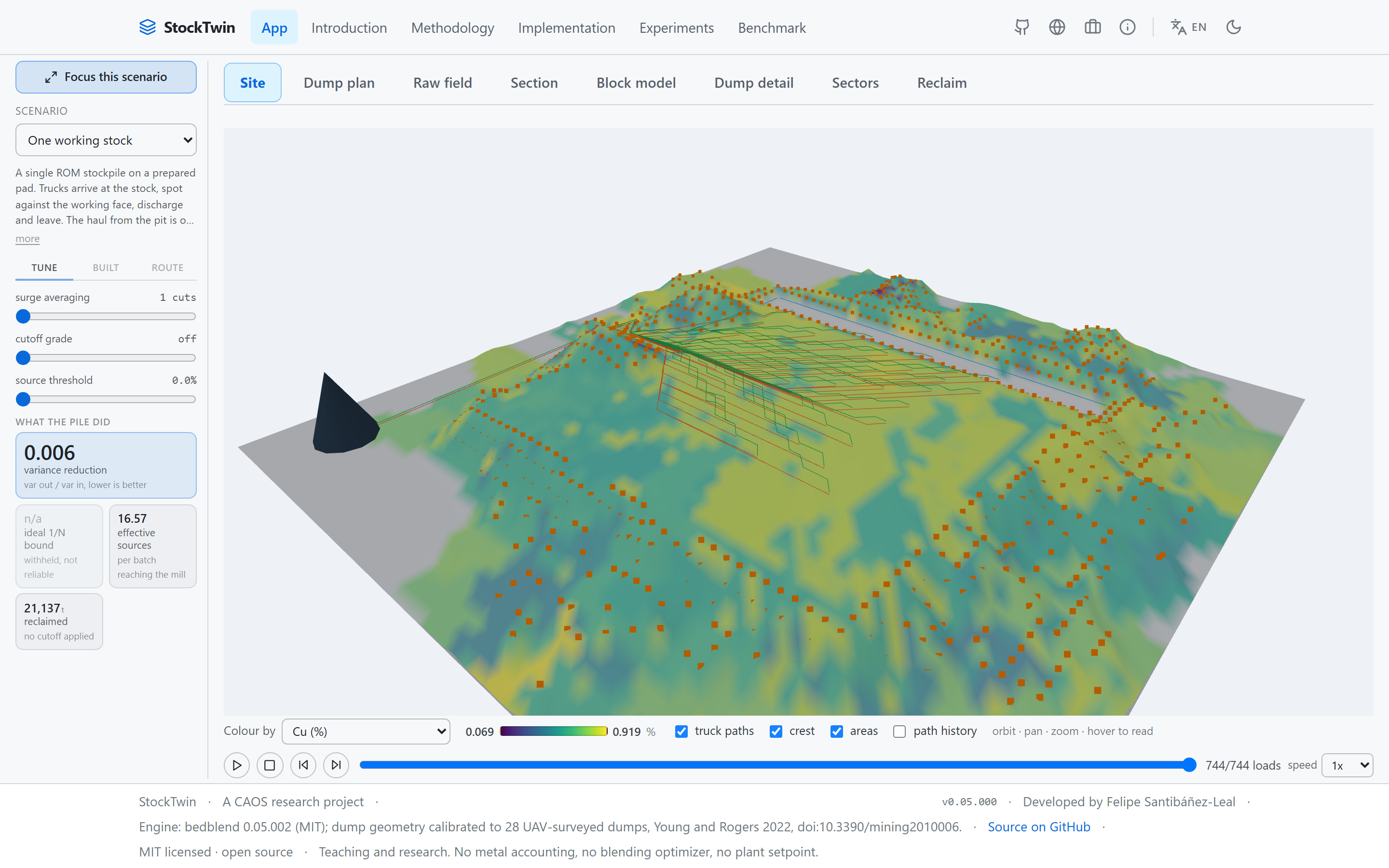
StockTwin builds a run-of-mine stockpile the way one is actually built: by trucks, one load at a time, following a dump plan, on ground they have to be able to climb. A truck routes over the trafficable surface, spots against the working face, tips, and leaves; the material stands at its angle of repose; a dozer turns the heaps into a floor so the next lift starts higher.
The fact the whole product turns on is a small one with large consequences:
Fresh material stands at about 37° and a haul truck climbs about two thirds of that.
So tips are positions inside a designed plan reachable over a ramp a dozer maintains, not arbitrary points on a pad. A tip a truck can no longer reach is refused and recorded (~17% of offered loads), because the plan is generated once while the pile grows away from it.
It then measures the three questions that matter, each against the right bound: homogenisation as variance reduction against the 1/N independent-layer bound (withheld where the layer count is unreliable), provenance as a per-cell lot ledger whose fractions sum to one on every cut, and size segregation with the Gray-Thornton kinetic-sieving model solved down a real face. 22 scenarios, 22,656 loads, every one relaxing to zero cell pairs over the angle of repose, gated on the actual artifact; two that would not relax were withdrawn rather than shipped broken. The engine is the separately published bedblend package. Synthetic and MineLib-public data only. A research workbench, not a blending optimizer, and it emits no plant setpoint. Part of the Faena hub. Live · source.