
Fourteen Years Later
Published:
Fourteen years later
Started rebuilding FeelIT. The original pin-array project from my undergrad days at UdeC, frozen since 2012. The hardware that stopped us — miniaturized electromechanical pin arrays at reasonable cost — still isn’t quite there. But the software side of the equation has changed completely.
In 2008 I was writing Windows Forms with OpenGL. Now it’s a FastAPI server with Three.js rendering. The Braille reader already works — loads Gutenberg texts, converts to 3D positioned cells, navigates with scene-native controls. 49 tests passing. Four distinct workspaces routed on port 8101.
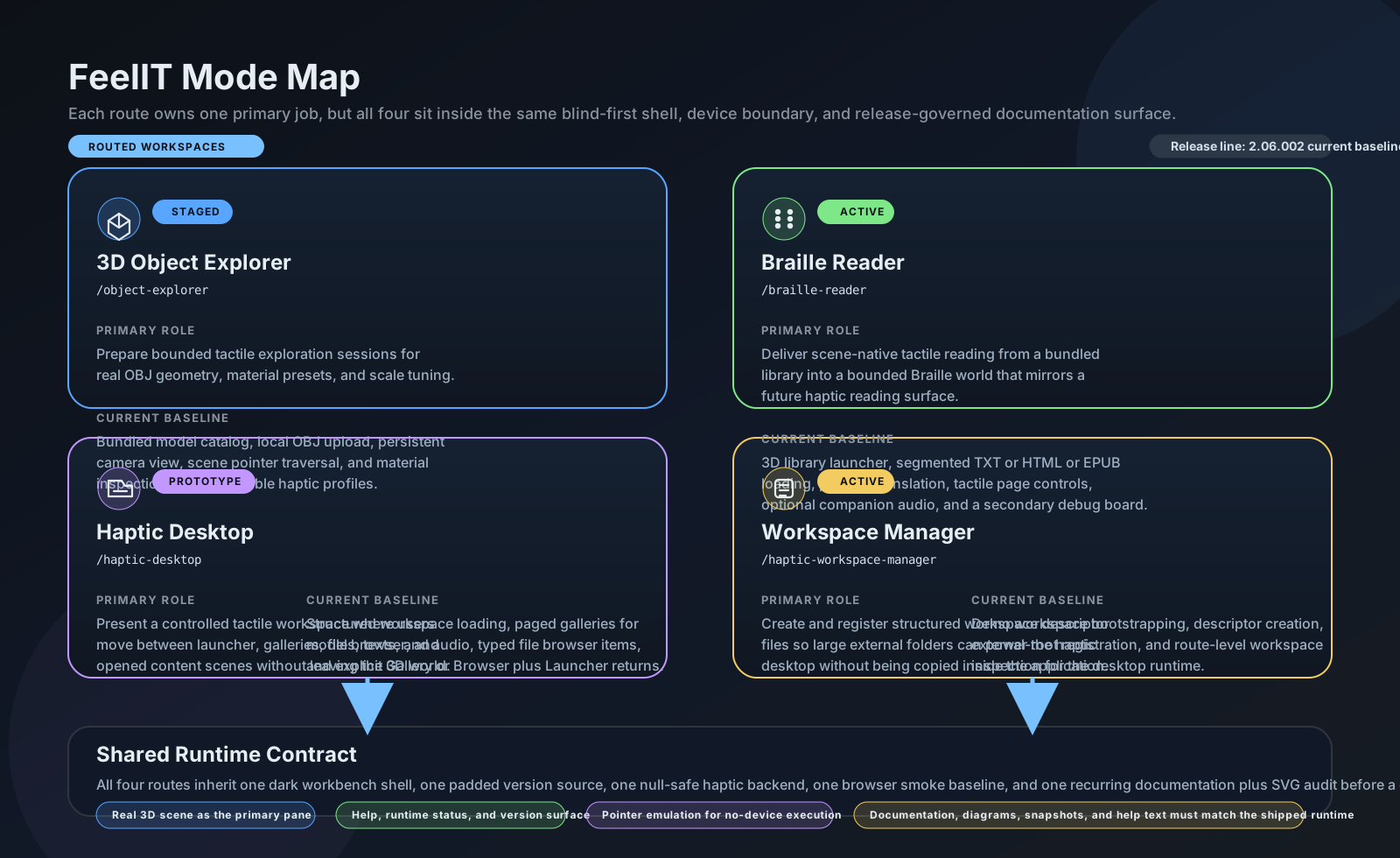
The part I’m most proud of is the methodological honesty. There’s an Implementation Gap Audit document that explicitly states what works and what doesn’t. No over-claiming. The 3D Object Explorer is “staged” — visually functional but waiting for physical haptic integration. The Braille Reader is “active” — fully working with keyboard interaction. The Haptic Desktop is “prototype” — demonstrates the concept but expanding.
8 tactile materials: Polished Metal, Carved Stone, Unfinished Wood, Rubber, Foam, Textured Polymer, Coated Paper, Glazed Ceramic
Each with stiffness (N/mm), static/dynamic friction, texture amplitude/spacing, vibration Hz
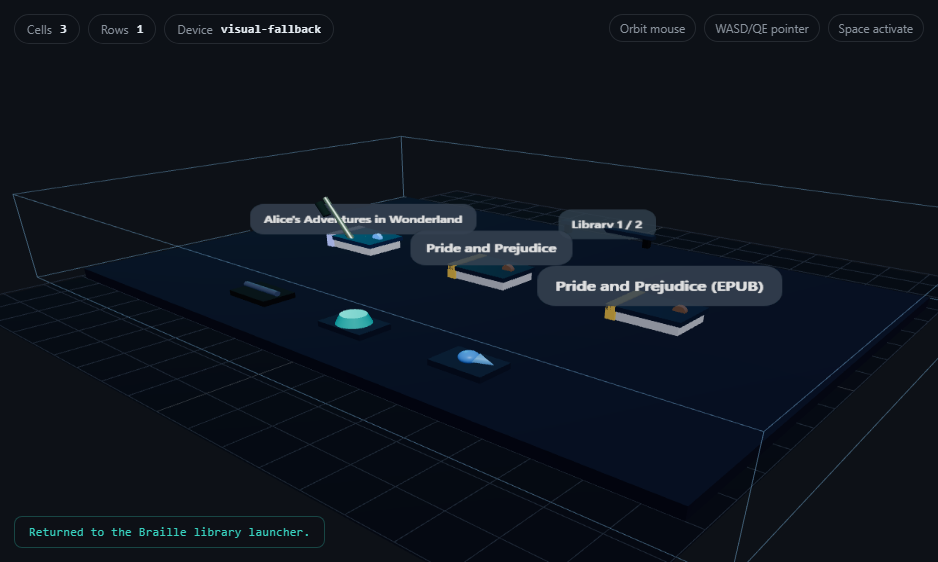
Strange feeling revisiting a project after 14 years. The 20-year-old me who built pin arrays with electromagnets would be amazed that the Braille cells are now floating in a Three.js scene. The 35-year-old me building this version is more concerned with whether the tests pass and the gap audit is honest.