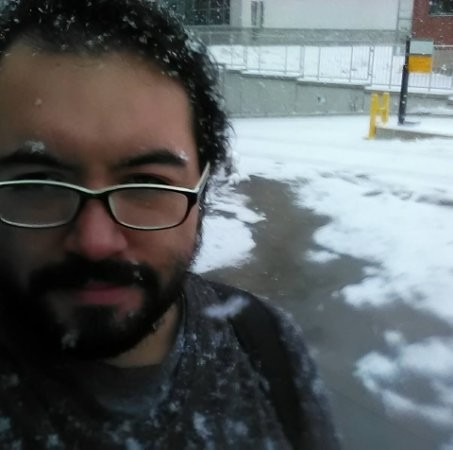
My doctoral dissertation defense
Published:
The end of my doctoral studies in electrical engineering has finally come.
The end of the cold winter
It has been a long process, where various family problems have increased the normal difficulty. They have been complex years with many losses – people I loved who did not get to see this day, whose absence was felt most acutely in the moments that should have been celebrations. Grief has a way of reshaping the timeline of a PhD; it stretches the years and makes the finish line feel impossibly distant. But those same years also brought a new family and love, and the contrast between loss and renewal is something I carry with me still.
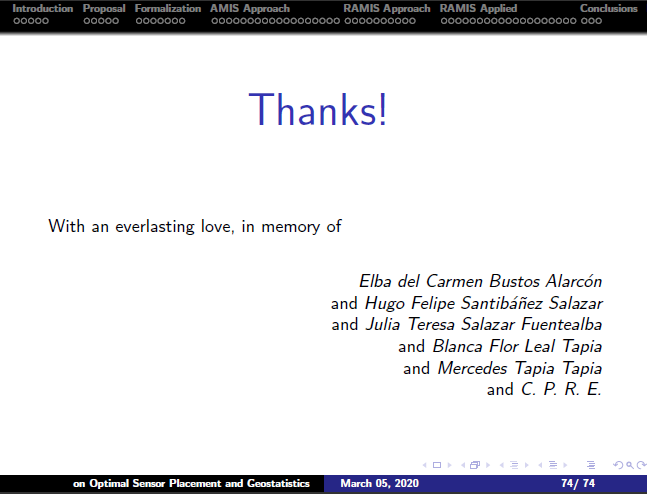
I consider myself a little hermit and I quite enjoy solitude. So neither family nor friends were invited to this activity. It was a calm and extensive defense, like all of them.
I am deeply grateful to my advisors – Prof. Jorge Silva and Prof. Julian Ortiz – who guided this work with patience and intellectual generosity across many difficult years. The doctoral commission, some of whom had to travel from afar to be present, gave their time and expertise to evaluate this work seriously and constructively. Their questions during the defense were rigorous but fair, and their feedback made the final version of the thesis stronger.
The timing of this defense carries its own weight. March 7, 2020 – just days before Chile began implementing restrictions due to the COVID-19 pandemic. The world was about to change in ways none of us fully anticipated. Looking back, there is something surreal about defending a doctoral thesis in those final days of normalcy, closing one of the longest chapters of my life just as a global crisis was opening. The defense itself felt like an ending and a beginning simultaneously – the relief of finally finishing, mixed with the uncertainty of what came next, both personally and for the world.
The topic
In this work, the formulation and experimental analysis of the Optimal Sensor Placement (OSP) problem has been investigated in the context of categorical 2-D models with spatial dependence. In the mining exploration and production area, this problem attempts to find the best way of distributing measurements (or samples) to optimize sensing/locating resources in areas of mining and drilling.
This work aims at formalizing the OSP problem for a given amount of available measurements. The characterization of the uncertainty is a central piece of this formalization – connecting information theory with geostatistics in a way that had not been done before for categorical spatial models. The full dissertation is available in the University of Chile repository, and the code implementing the information-driven sampling framework is open-sourced on GitHub.
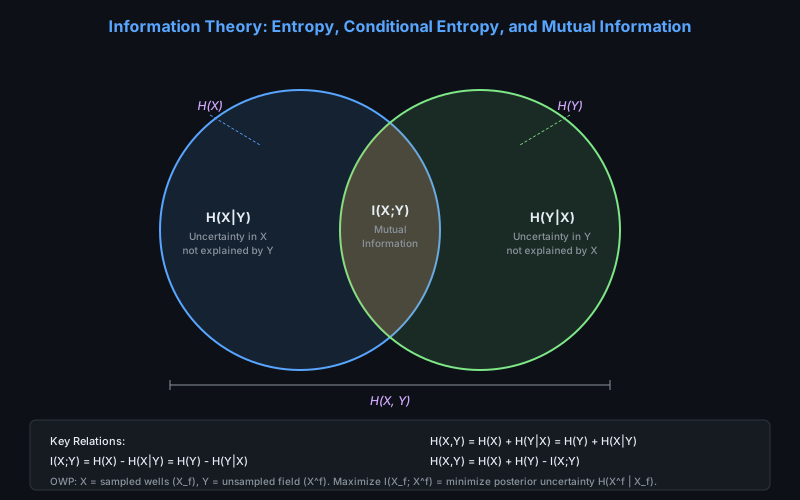
H(X) = −Σ p(x) log₂ p(x)
More details?
Some additional information about the topic and the talk can be found Here